
The earliest years of language development are the most neurologically significant. The foundations we lay before age 5 — rhythm, tone, emotional association, and sound patterns — shape how easily and confidently a child acquires English in every year that follows.
Language begins before words.
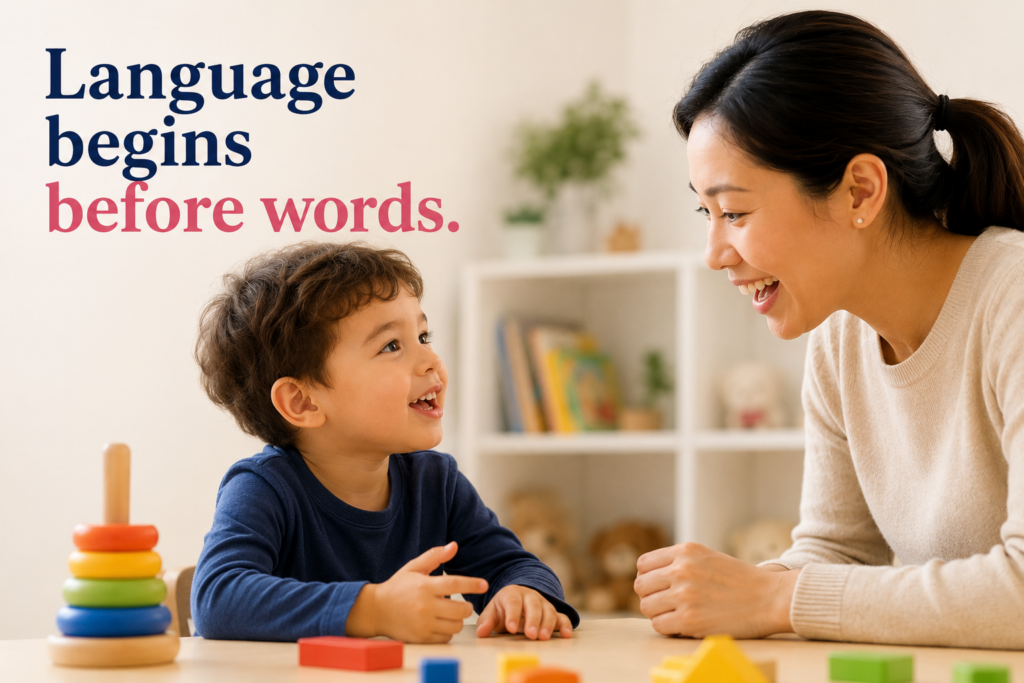
Safety before structure
At this stage, language begins through warmth, rhythm, repetition, and emotional connection. Songs, rhymes, gentle story exposure, and responsive parent-child interaction in English create the neural pathways that all future language will travel.
Early language confidence
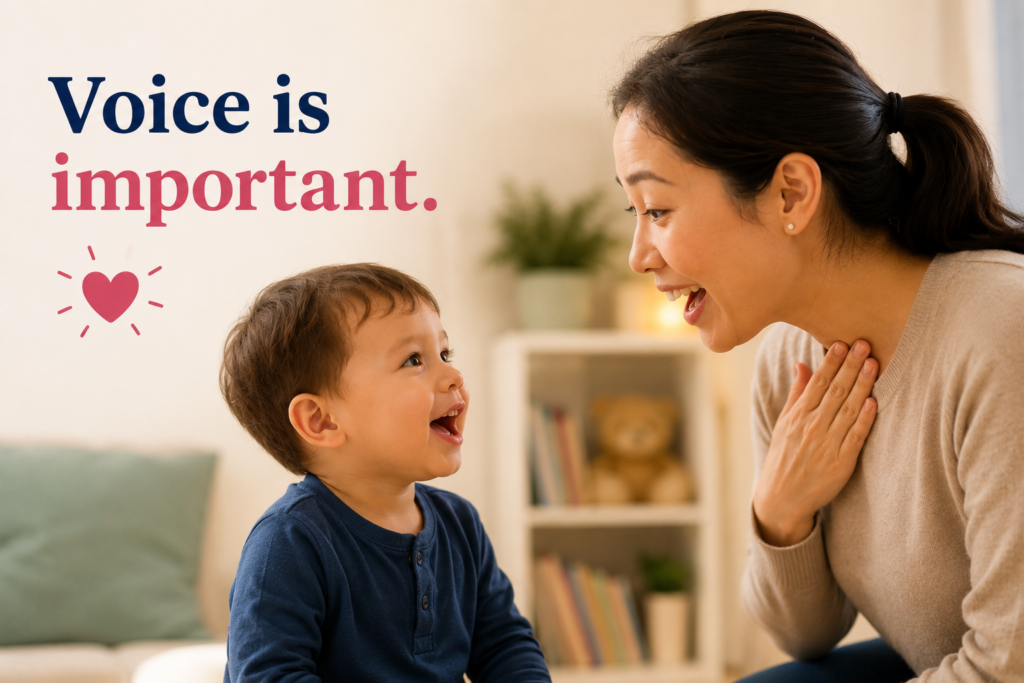
Voice through guided play
ESL foundations built through interactive storytelling, alphabet exploration, basic vocabulary in daily contexts, and confidence-building games that make English feel safe and exciting. Listening and speaking come first. Reading and writing follow naturally.
Expression before perfection
Early start children arrive with something others spend years trying to build.
No Language Anxiety
Children who begin English in emotionally safe environments before age 6 rarely develop the language anxiety that plagues adult learners. They simply don't learn to be afraid of it.
Accent Acquisition
The phonological window for near-native pronunciation closes between ages 8–12. Children who begin early acquire pronunciation patterns that later learners spend years trying to approximate.
School Readiness
Children entering English-medium schools with Speak & Shine foundations participate from day one. They raise their hands. They answer questions. They belong.
The brain at 0–4 is doing something it will never do again.
Between birth and age three, the brain forms 1 million neural connections per second. This is the most intense period of language architecture the human brain will ever experience. What a child hears, feels, and associates with language during these years becomes the permanent wiring that all future English will travel through.
Patricia Kuhl — Neural Commitment Theory (2004)
By 10–12 months, a baby's brain has already begun to specialise in the sound patterns of the languages it hears. Children exposed to English phonemes early develop neural pathways that make later pronunciation, listening, and fluency dramatically easier. Children not exposed to these sounds must build them later — against the grain of existing neural architecture.
What This Means for Families
You do not need to teach your baby English. You need to let your baby hear English — in warm, emotionally safe, human-led interactions. Songs. Stories. Conversations. Laughter. The brain does the rest. Our Early Start programme provides exactly these experiences — structured, playful, and designed by developmental language specialists.
The earlier your child begins, the deeper the foundation.
Register for free Early Start materials and give your child the neural advantage that no later programme can replicate.