Build the room where voice becomes action.
An education institute connecting curriculum design, Teacher development, international communication, workforce pathways, research and human-centered educational technology.

Methodology grounded in school practice.
Curriculum design begins with the realities of the school day and the communication students are expected to use. CEFR and CPALMS standards resources provide complementary reference points for language and academic progression.
The curriculum is prepared specifically for live international communication, from early speaking confidence through academic, research and leadership communication.
CEFR is used as an international reference point for language development and communication expectations.
CPALMS standards resources inform age-appropriate academic language, literacy and communication design.
Learn & Work Florida connects those needs through one educational ecosystem. The Institute is the strategy, curriculum, research and partnership layer behind Shining Speech™ and the family-facing Florida Star Academy experience.
What the Institute actually builds.
The work sits where education, professional development, technology and international communication overlap.
Educational Model
Shining Speech™ curriculum, age pathways, lesson design, speaking progression and Care / Quality guidance.
Teacher Development
Supervision roles, onboarding, training materials and the Teacher + Buddy quality structure.
International Education
School and campus partnerships that create structured communication across borders.
Workforce Pathways
Supervised developmental experience for adults 18+, with a featured College / University Student Fast-Track.
Educational Technology
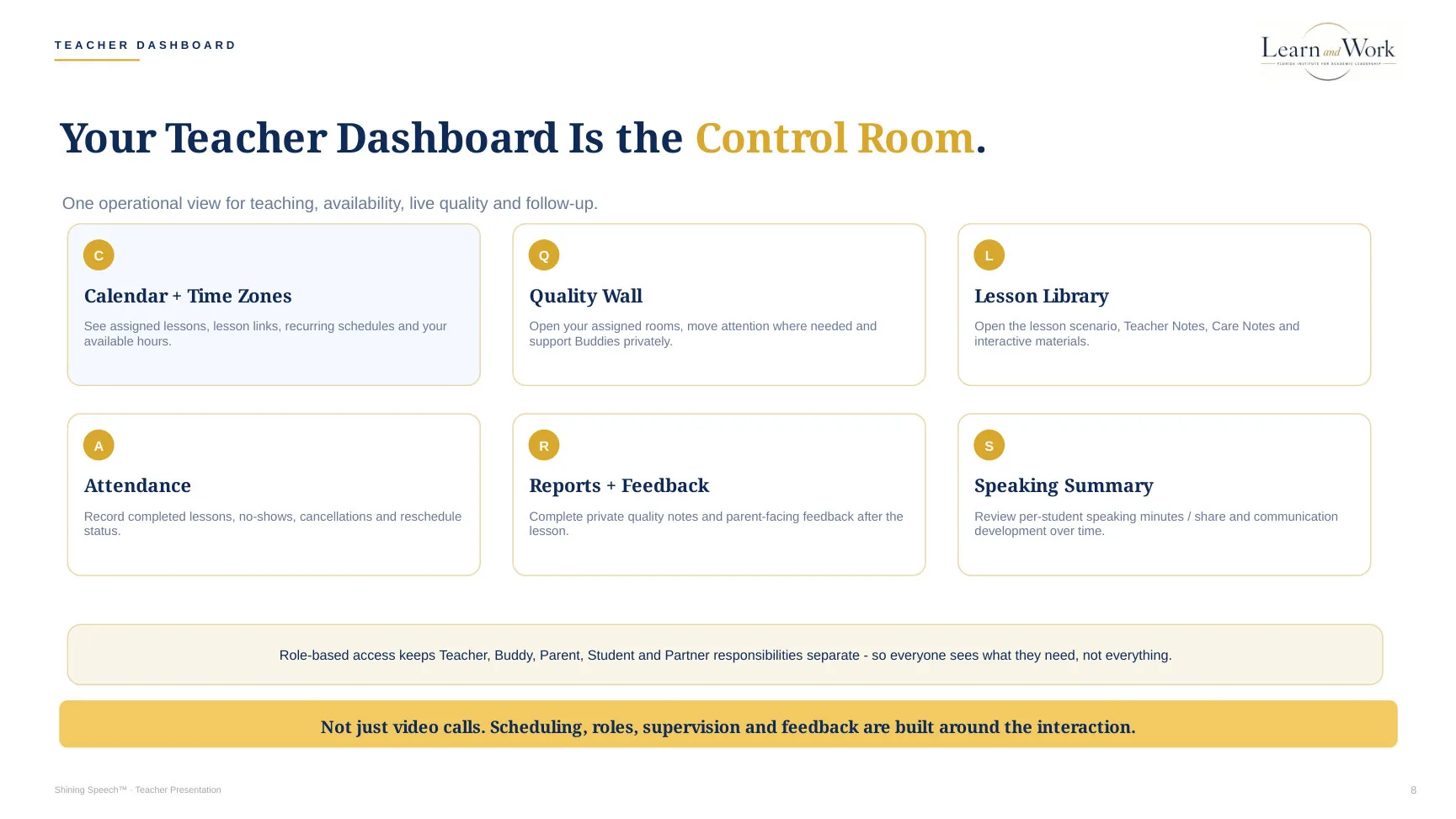
Role-based scheduling, dashboards, lesson access, supervision and reporting designed to support human interaction.
Research & Publications
Long-form resources and ongoing inquiry into the gap between knowing, speaking, participation and leadership.
A research idea should not stay in a PDF forever.
The Institute is designed to move ideas into lessons, supervision, partner workflows and educator training. That feedback loop matters: research informs program design, live practice reveals new questions and the next version of the framework becomes more useful.
What happens between knowing and speaking?
The Institute’s questions sit at the intersection of bilingualism, relocation, public speaking, participation, AI-supported learning, digital environments and live human interaction.
How can education observe the difference between language knowledge and willingness to use it live?
How do multilingual environments shape participation and classroom presence?
What changes when a child moves across countries, languages and classroom cultures?
Where can AI support learning without replacing the conversation learners still need?
How can technology help one Teacher maintain oversight across multiple small live rooms?
How can supervised educational roles help young adults develop communication and leadership before graduation?
One program can create value on both sides of the conversation.
The model is intentionally two-sided: the learner practices voice while the adult participant develops responsible experience under an educator’s supervision. Families choosing the program help sustain a system that can create supervised development opportunities for young adults in participating communities.
More live opportunities to participate and explain.
Communication, mentoring, leadership and international exposure.
Extends expertise through supervision and mentoring.
Adds structured international communication.
Families support a model where young adults can build supervised experience and carry stronger communication, leadership and responsibility back into schools, organizations and future workplaces.
Choosing Shining Speech™ for a child supports a model designed to create value on both sides of the conversation: children receive more structured opportunities to speak, while young adults can gain supervised experience that strengthens the local talent pipeline. Over time, that experience can return to the community through stronger future educators, mentors, communicators and team members.
Practical communication skills every child needs to thrive.
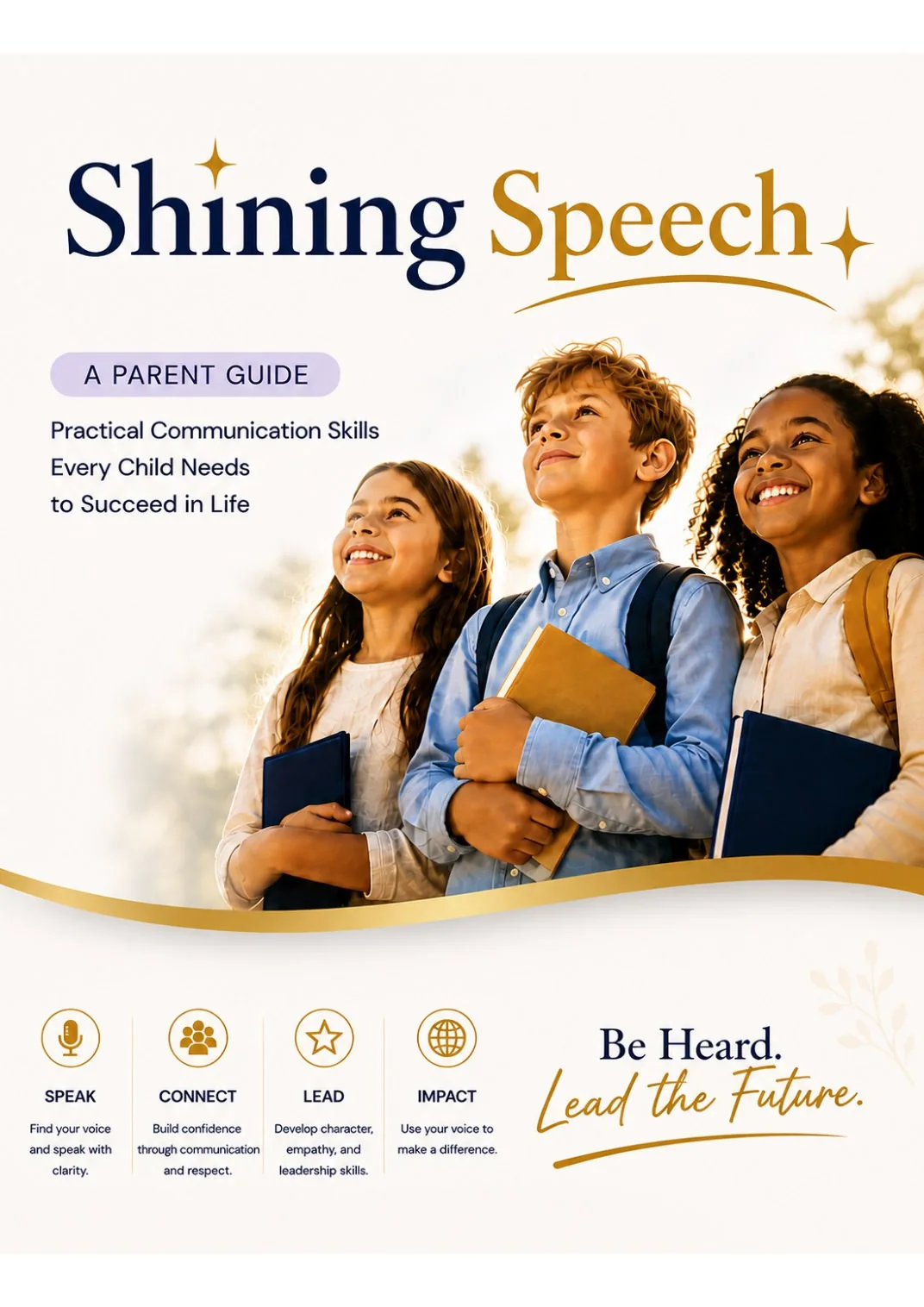
The Shining Speech™ Parent Guide explores the environment behind expression: confidence, digital balance, Teacher role, communication space, relocation and the path from expression toward leadership.
“Environment first. Confidence first. Expression first.”
The book is educational and does not replace medical, psychological or professional advice.
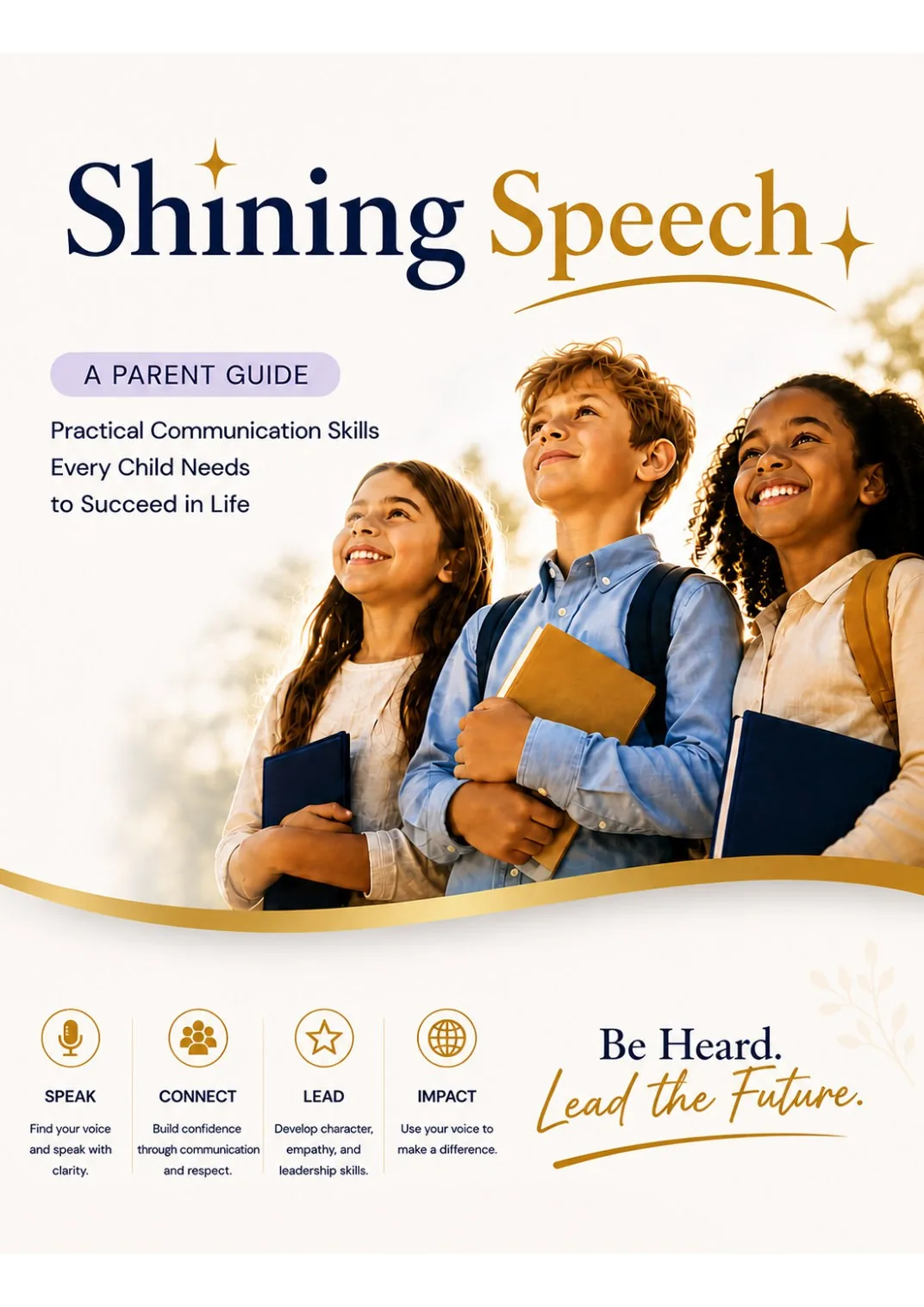
Claim your free Parent Guide
Shining Speech™ — practical communication skills every child needs to thrive. We will email you the PDF straight away.
The Institute thinks. The Academy delivers.
Learn & Work Florida Institute is the research, strategy, curriculum and partner layer. Florida Star Academy is the family-facing learning environment where enrollment, schedules, lessons, progress and Teacher communication come together.
Learn & Work Florida
- Educational strategy and curriculum
- Research and publications
- Teacher / Buddy framework
- Partner infrastructure
- International connections
Florida Star Academy
- Family-facing learning experience
- Enrollment and lesson access
- Schedules and progress
- Teacher communication
- Shining Speech™ delivery
Anna Witek
The Shining Speech™ Parent Guide identifies Anna Witek as Founder & Managing Director and Academic Executive of Learn & Work Florida Institute for Academic Leadership.
The method’s narrative begins with years of conversations with families across different countries and school systems. The recurring question was not simply “Does the child know English?” It was “What does it take to build the environment where the child finally feels safe enough to use their voice?”
The Institute was built to turn that question into curriculum, systems, training and applied educational practice.
Credibility without inflated claims.
The Institute’s public language should be ambitious and precise at the same time.
Is Learn & Work Florida the same as Florida Star Academy?
They are related parts of the same educational ecosystem. The Institute focuses on strategy, curriculum, research, training and partnerships. Florida Star Academy is the family-facing learning environment.
Is Shining Speech™ a therapy program?
No. It is an educational communication program and does not replace medical, psychological, speech-language or other professional care.
Does the Institute claim state accreditation or DOE approval?
This website does not make those claims. Any regulatory or accreditation statement should be published only when supported by the relevant official documentation.
Why include workforce pathways in an education institute?
Because the model connects child speaking practice with supervised experience for adults 18+, while preserving Teacher authority and defined boundaries.
One conversation can create value in two directions.
The Institute model is intentionally bilateral. The child receives more structured opportunities to speak. The adult 18+ can build supervised experience. The Teacher develops future educators and protects quality. The school creates international connection without giving up its educational identity.
More live opportunities to speak, explain and present.
Supervised communication, responsibility and international exposure.
Mentor, supervise, observe and make educational decisions.
Turn local people into a structured international communication team.
Create a clearer bridge between learning, service, experience and future professional pathways.
Partner Schools help students understand the United States through the people who experience its education every day.
For Partner Schools, Learn & Work proposes recurring international communication with students who are preparing for higher education, international study and early professional life. The aim is to create a structured exchange where students can ask, listen, compare perspectives, present ideas and understand how another education system feels from inside the classroom.
Higher-education awareness
Older learners can discuss study habits, presentations, campus expectations, teamwork, communication and the transition toward college or university.
Professional exchange
Educators can compare classroom approaches, communication expectations, student participation and the practical challenges of preparing young people for the next stage of education.
Institutional perspective
Schools can help explain educational culture, community life, pathways into higher education and the context surrounding students, without turning the exchange into admissions advice.
Structure around the dialogue
We provide the program framework, scheduling logic, role clarity, supervision model and communication structure so the relationship can become recurring rather than occasional.
We invite Partner Schools to contribute, not simply participate.
We hope schools will help us choose useful themes, nominate educators and student groups, shape class-to-class questions and tell us what international learners should understand about education in the United States. The exchange becomes more valuable when schools bring their own knowledge, people and culture into it.
- Preparing for college and university study
- How students communicate with teachers
- Presentations, teamwork and academic discussion
- School culture, clubs, leadership and community life
- Choosing fields of study and exploring careers
- International communication and cultural perspective
Local classroom. International team. One live session.
In the EU school format, up to 30 learners stay physically in their school classroom with at least one local Teacher present. A Buddy and Master Quality Teacher can work on-site from a Partner school / college hub or join online from another location, while remaining in the same live lesson and supervision structure.
Teacher stays in the room
At least one local Teacher is physically present with the class and remains the local educational authority.
Buddy + quality supervision can travel digitally
The Buddy and Master Quality Teacher may be together at a college / school hub or work remotely, with the same live contact and defined roles.
Transatlantic scheduling
South Florida is typically six hours behind Central Europe: 8:00 AM Florida is about 2:00 PM Central Europe, and 3:00 PM Florida is about 9:00 PM. Seasonal clock-change weeks can shift this by one hour.
Florida mornings can meet European classrooms and after-school learners.
For South Florida / Central Europe, the usual difference is six hours. A practical school-partnership window such as 8:00–11:00 AM Florida aligns approximately with 2:00–5:00 PM Central Europe. Supervised individual sessions can extend toward 3:00 PM Florida / 9:00 PM Central Europe. The scheduling system should use time zones directly because daylight-saving changeovers temporarily alter the difference.
School window
Use a focused 3–5 hour Florida-morning block for European school or institutional sessions, depending on each Partner timetable.
Individual window
A wider Florida daytime block can align with European after-school hours, increasing scheduling flexibility for supervised individual sessions.
Student availability
College schedules vary, but morning availability can create a useful cross-Atlantic fit. Any participation hours must remain compatible with academic commitments, Partner policy, work authorization and applicable law.
A multidisciplinary institute needs multidisciplinary educators.
The Institute welcomes licensed educators from many subject areas into Master Teacher development, alongside professionals who can build school, college and institutional partnerships. Current recruitment information is maintained on the Careers page.
Education should create more voice, more judgment and more human capability.
Discover Shining Speech™, explore the campus Buddy pathway or talk with the Institute about an educational partnership.